KozyCore
Wearable Heat, Engineered to Perform
Cold-weather exposure forces people to choose between staying warm and staying mobile, with bulky layers often trading comfort for protection. KozyCore identified a critical need for a wearable that delivers reliable heat without sacrificing flexibility or comfort. They partnered with Unlimit Ventures to transform their working prototype into a sleek, manufacturable device backed by thorough mechanical, electrical, firmware, and textile engineering.
Introducing: Kozycore
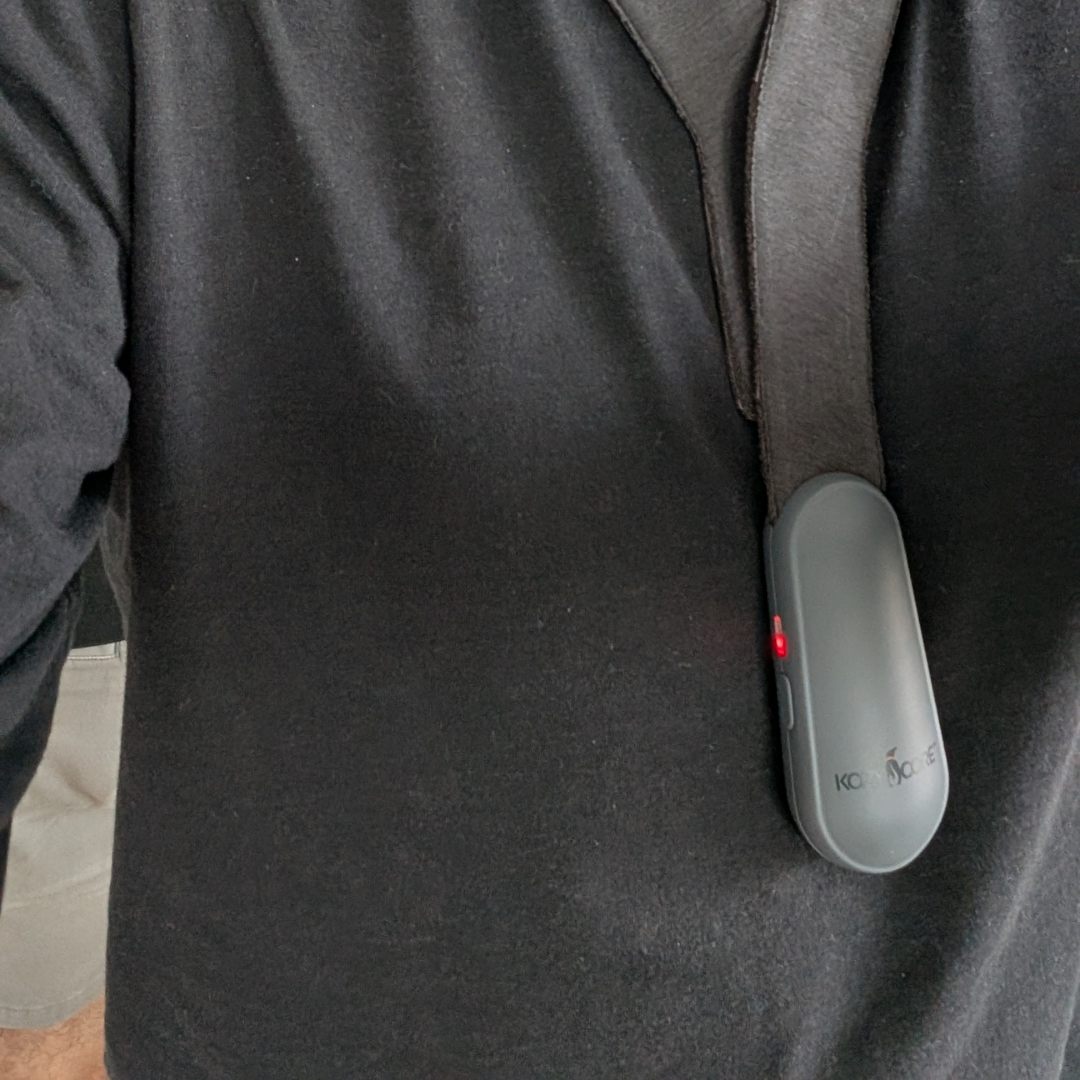
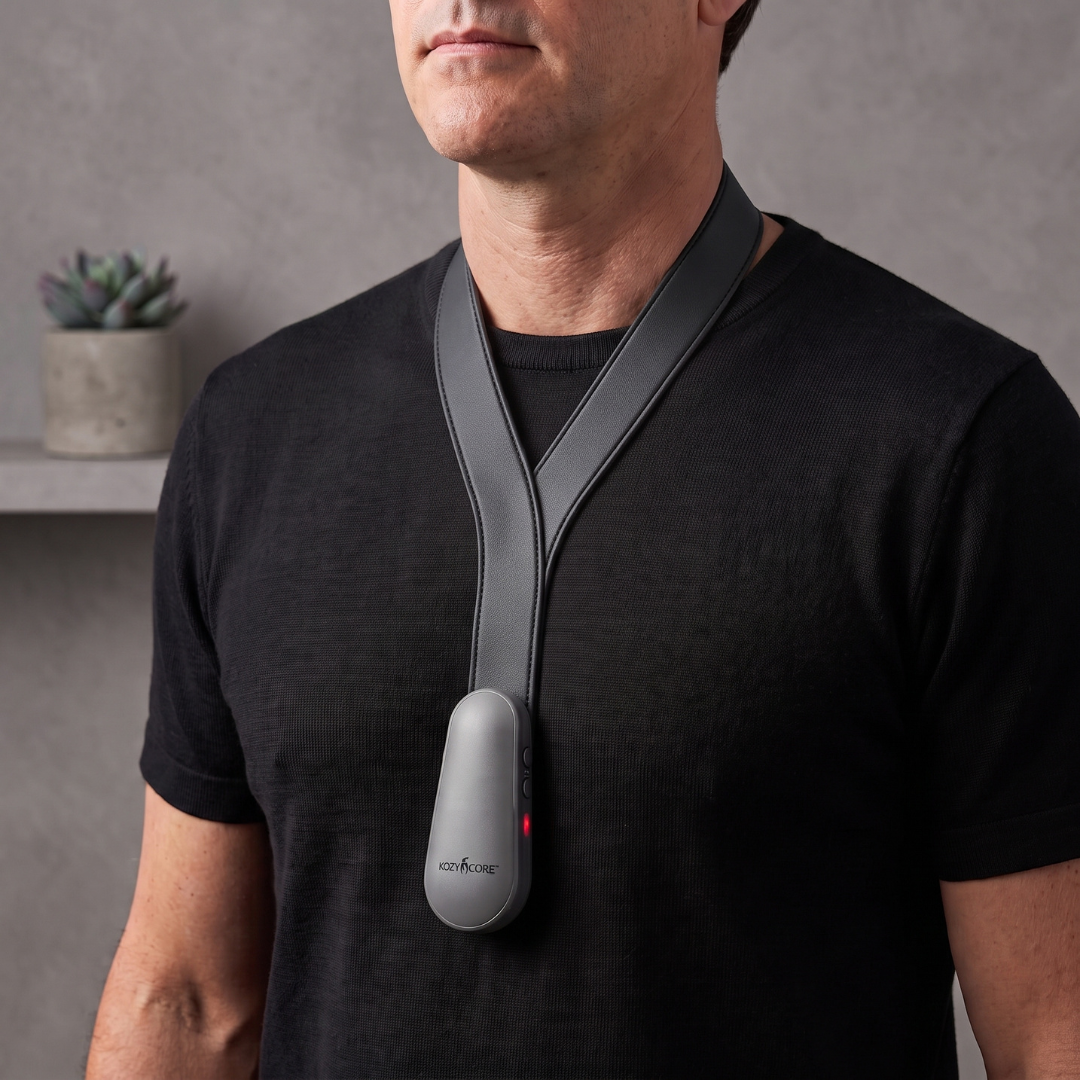
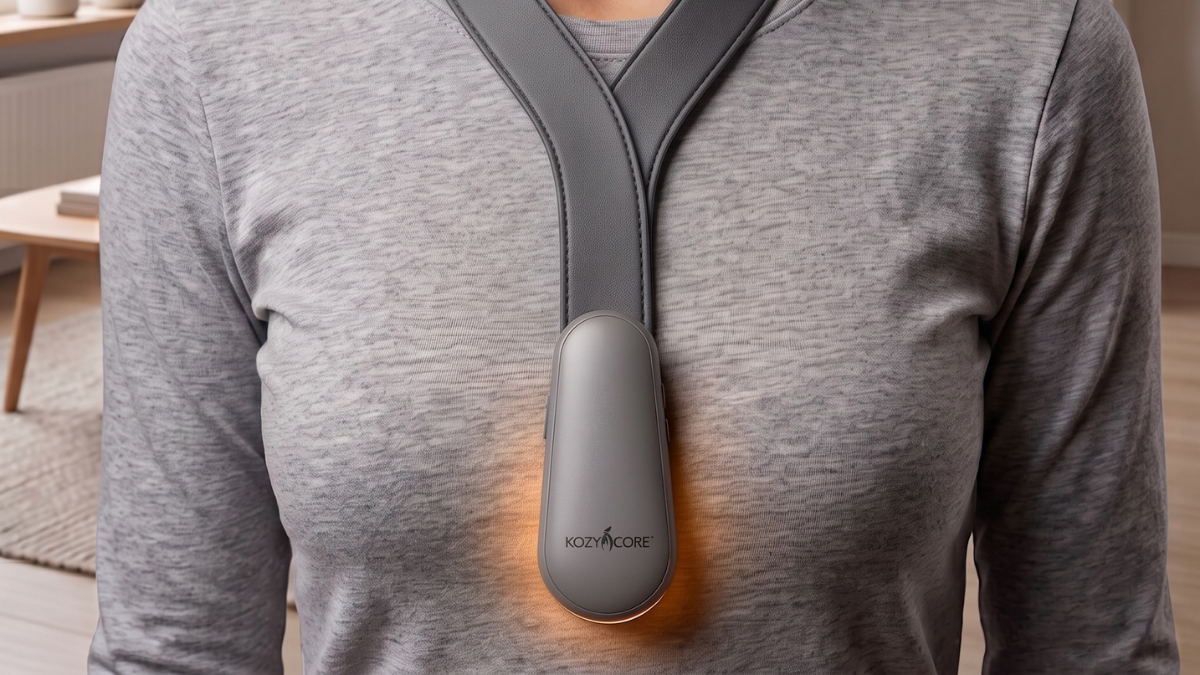
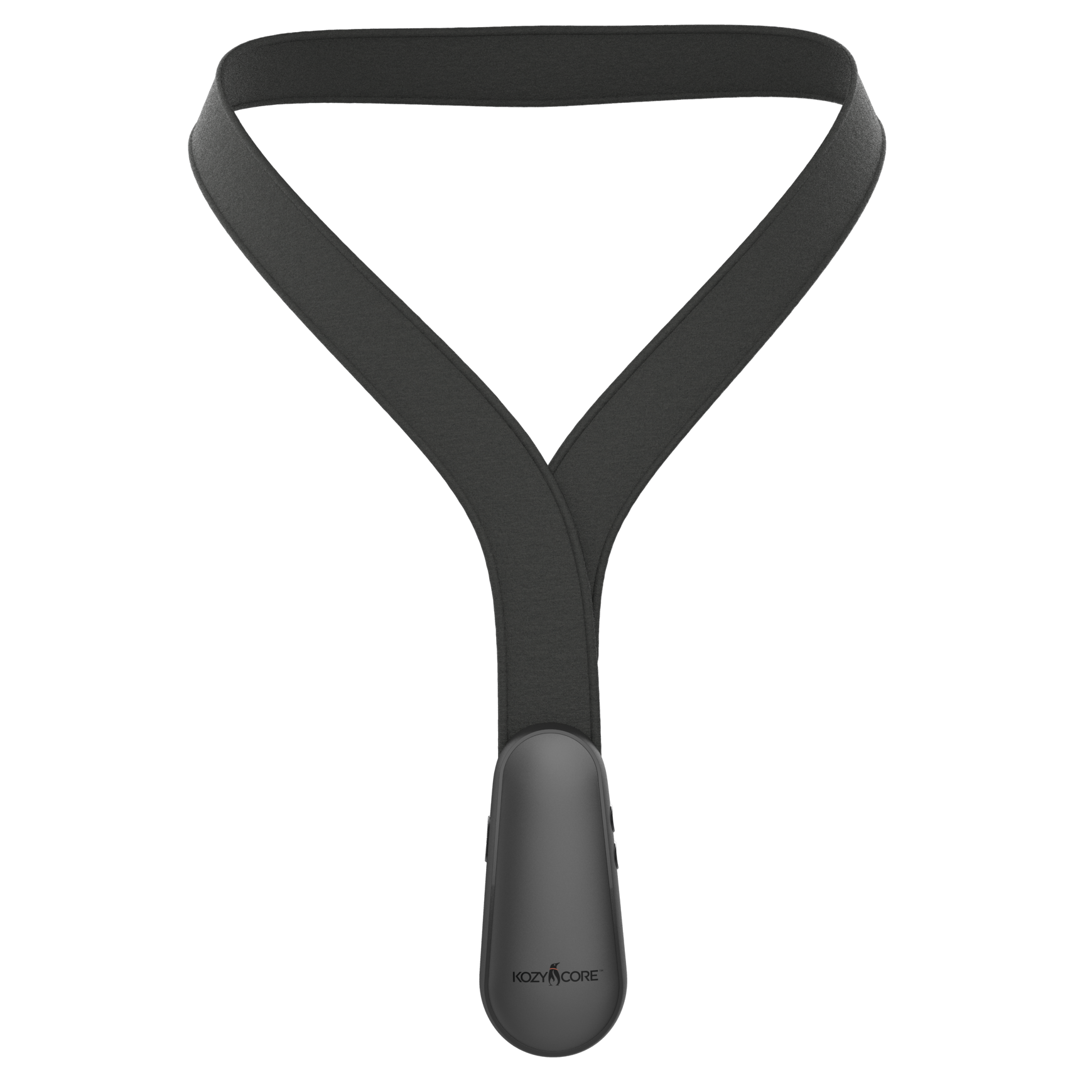
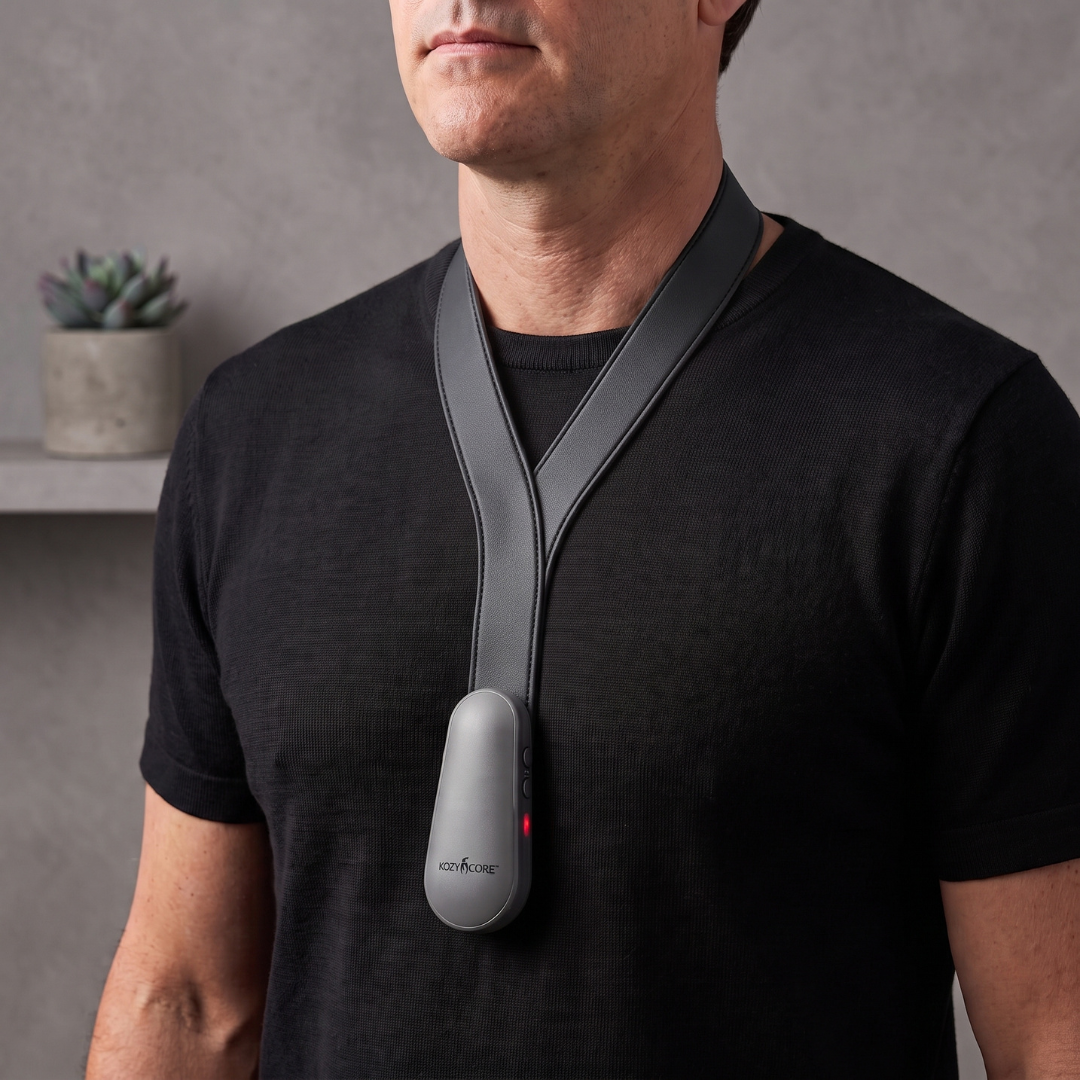
KozyCore is a wearable heating product built to keep users warm in cold-weather conditions without restricting movement. Heat is delivered through flexible heating elements embedded directly into the garment's textile construction, evaluated across polyamide and graphene-based options to balance comfort against heat output. Power comes from a rechargeable battery, with runtime of four to six hours per charge depending on whether the user selects the high or low heat setting.
The product's electronics are managed by custom firmware that governs power delivery, heat level, and LED indicator behavior in response to button input, with low-power optimization built in to extend time between charges. Battery status is surfaced to the user through an integrated fuel gauge and battery-level LED indicators, giving a visual read on remaining charge without a companion app or display. A magnetic clasp system replaces traditional fasteners, letting the wearer put the product on or take it off with one motion instead of buckles, zippers, or snaps. The garment itself is constructed from soft, wearable textiles engineered to hold up to repeated wear and washing while remaining flexible enough for daily use.
Unlimit Ventures’ Contribution
Conducted a full evaluation of the existing prototype's mechanical construction, electrical architecture, firmware, and softgoods integration before recommending changes.
Identified product feature priorities and improvement areas that directed the scope of the redesign.
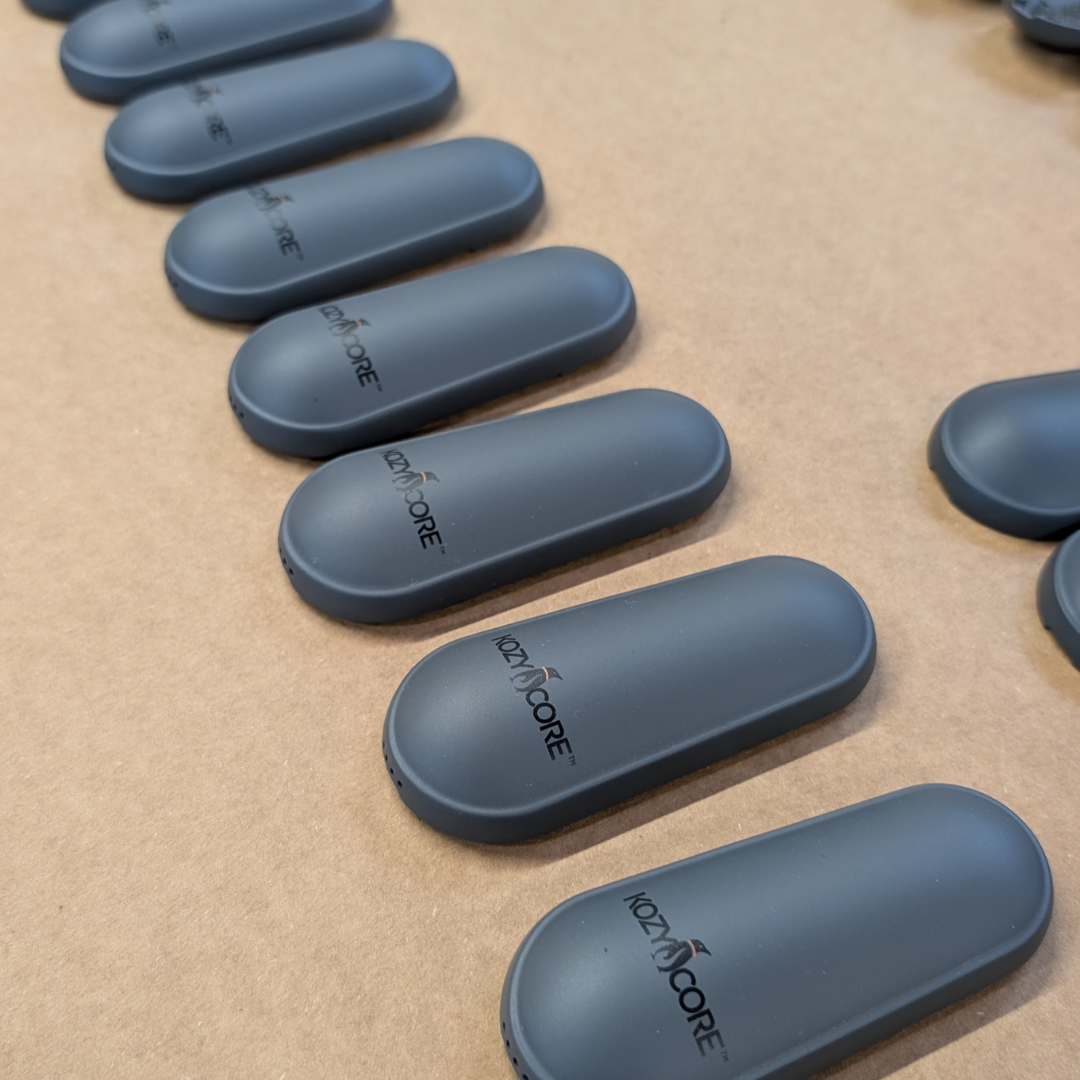
Built production-ready CAD models and refined the industrial design for tooling and manufacturing partners, structured to enable future design iterations.
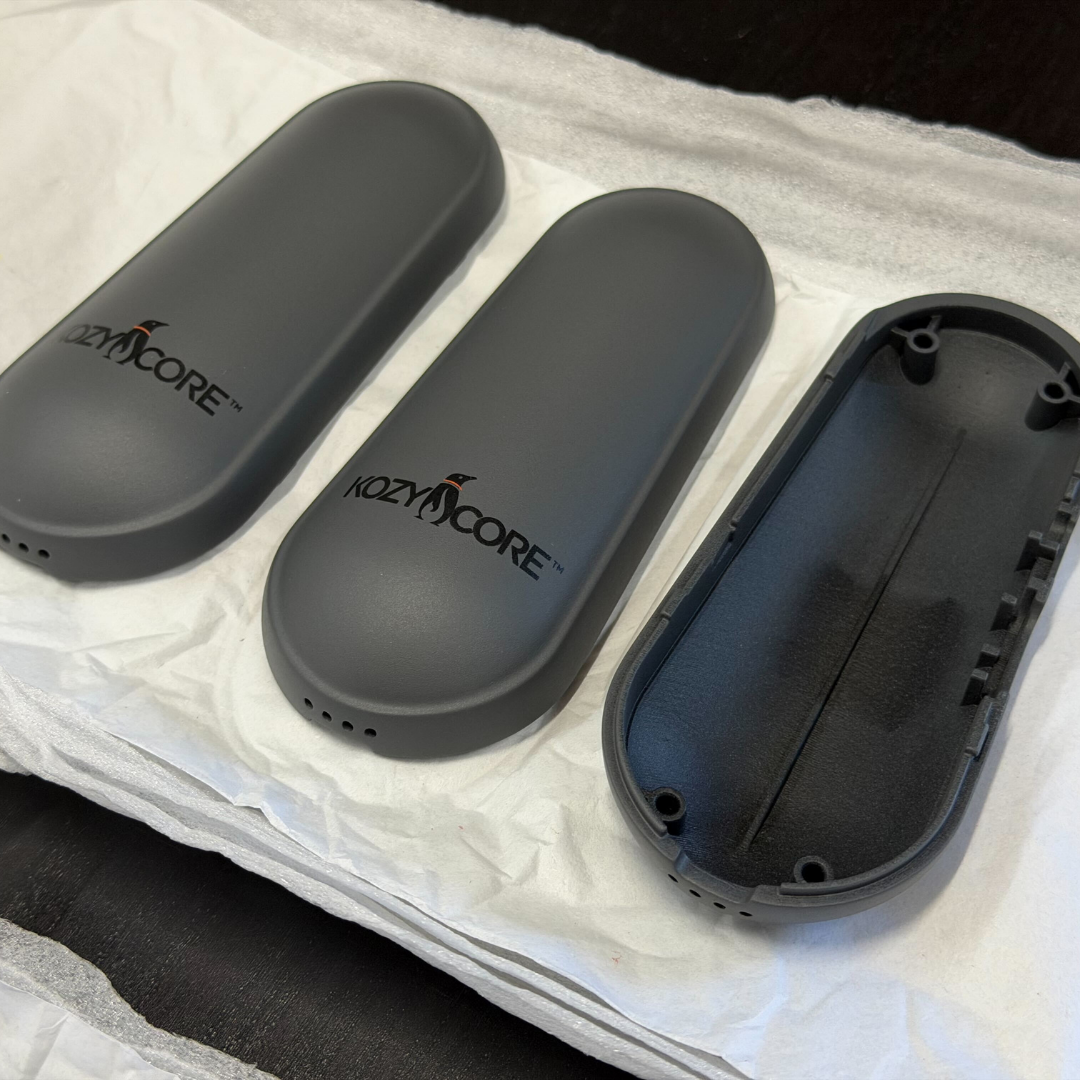
Applied plastics optimization and DFM review to cut part count and simplify assembly without compromising structural integrity, eliminating assembly steps and excess hardware such as screws.
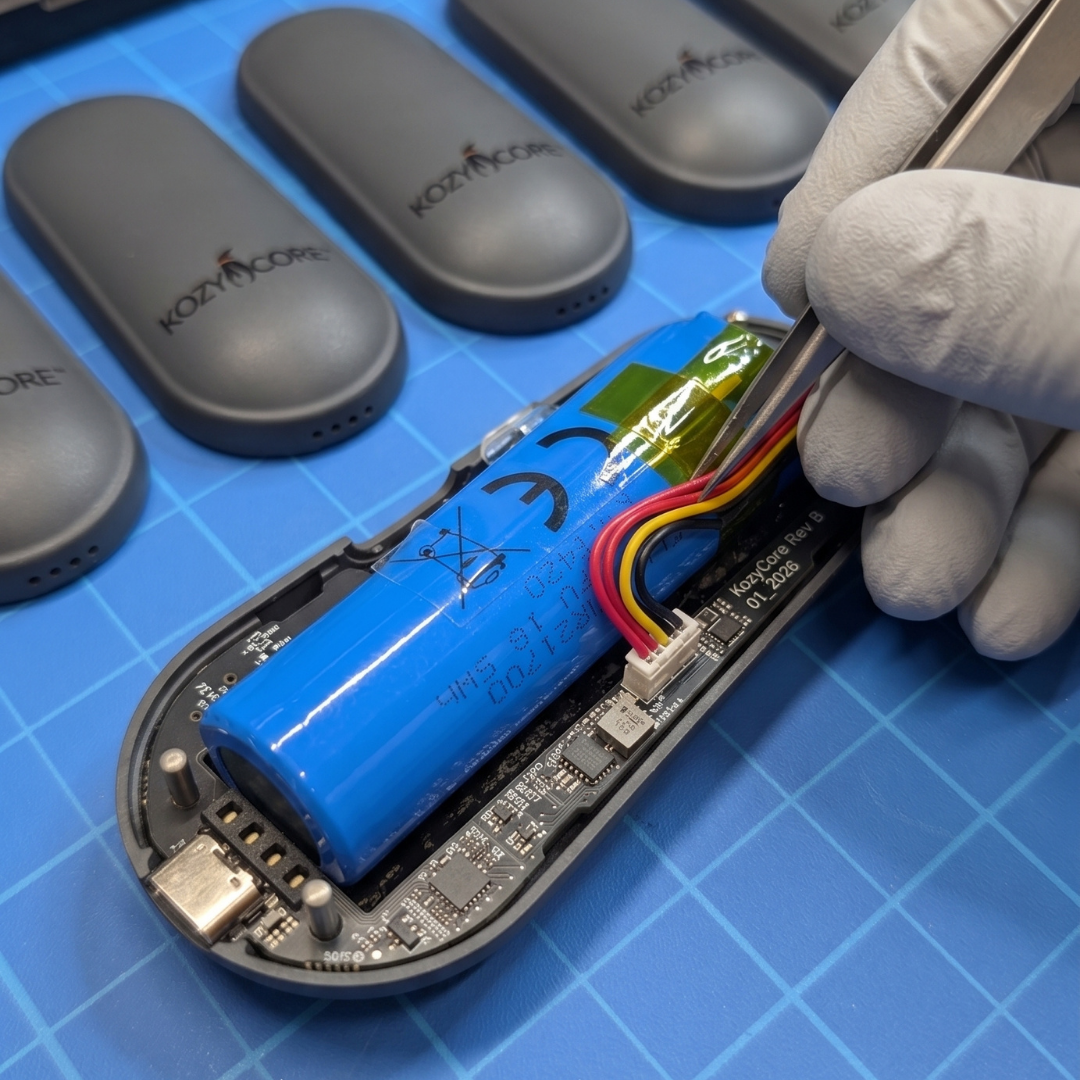
Engineered the enclosure to accommodate battery swell over the product's lifespan, addressing a common failure point in battery-powered wearables.
Integrated interface buttons, LED light pipes and shrouds, and PCBA packaging into the housing without adding bulk.
Defined color, material, and finish (CMF) direction for a cohesive, premium consumer look.
Performed a power budget analysis to guide battery selection and shape the electronics architecture, documented in a custom electronics architecture diagram.
Developed custom schematics and a compact PCB layout, including a fuel gauge and battery-level LED indicators, evaluating component selection for manufacturing efficiency; optimized board shape and routing for tight packaging and produced a rapid prototype spin for validation.
Developed the textile construction through rapid prototyping, testing fabric options for comfort, flexibility, and durability under repeated wear and washing.
Researched flexible heating technologies, including polyamide and graphene-based elements, to match KozyCore's comfort and performance requirements.
Integrated a magnetic clasp system to simplify donning and removal.
Engineered the cross-discipline integration of heating elements and wiring directly into the fabric, and integrated the softgoods assembly into the consumer plastics device.
Defined the product's MCU requirements and built custom firmware to manage power, LED behavior, and button input, with low-power optimization to extend battery life.
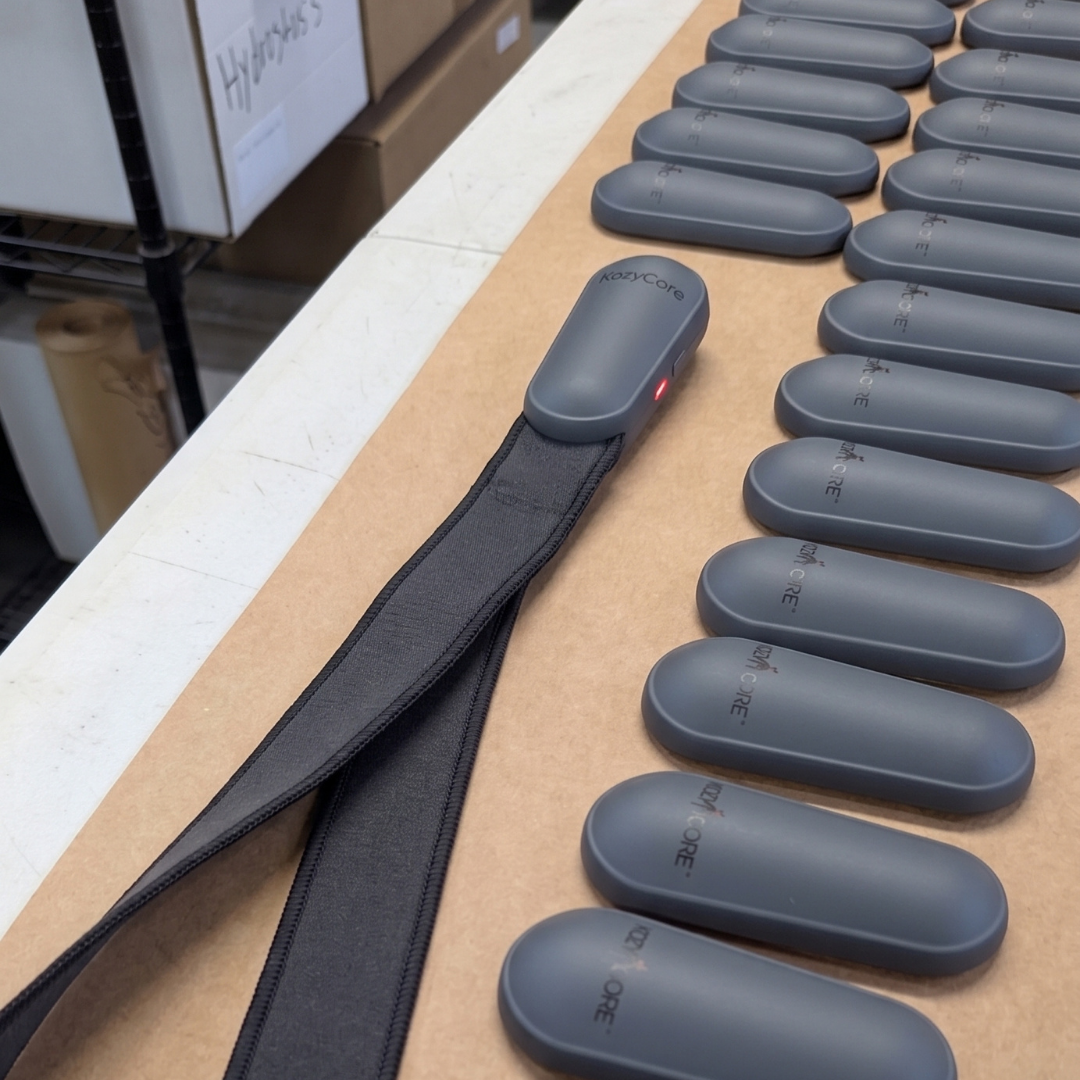
Stood up domestic and offshore supply chain operations, qualifying manufacturing partners for production.
The Benefits of Wereable Heat
Re-engineering the prototype under manufacturability constraints delivered benefits beyond the original proof of concept. Reducing part count through DFM review lowers assembly time and per-unit cost, which matters more at volume than it did for a single prototype unit. Addressing battery swell at the enclosure level rather than after the fact removes a known reliability risk in wearable electronics before it reaches customers, reducing the likelihood of field failures and warranty claims.
Embedding heating elements and wiring directly into the fabric, instead of layering electronics onto a finished garment, keeps the product thin and flexible, supporting the comfort and mobility the concept was built around. Firmware-level power management extends usable runtime per charge without requiring a larger, heavier battery. And with a domestic and offshore supply chain already established, KozyCore can move into manufacturing without a separate sourcing phase, shortening the path from finished design to shipped product.

Key Features of KozyCore
Flexible heating elements — polyamide and graphene-based options selected for a balance of heat output and wearer comfort.
Rechargeable battery system — four to six hours of runtime per charge, depending on heat setting.
Integrated fuel gauge and LED indicators — give the wearer a direct read on remaining battery charge.
Magnetic clasp closure — allows the garment to be put on or removed without buckles, zippers, or snaps.
Custom firmware control — manages power delivery, heat level, and LED behavior via button input, with low-power optimization to extend runtime.
Durable textile construction — engineered to withstand repeated wear and washing while remaining flexible.
Swell-tolerant battery enclosure — accommodates battery expansion over the product's service life without compromising fit or safety.
Project Update:
The KozyCore program moved through several stages since Unlimit Ventures joined as engineering partner. Work began with a full technical evaluation of the existing prototype across mechanical, electrical, firmware, and softgoods domains, establishing a baseline of what needed to change before manufacturing could begin.
From there, mechanical, electrical, and firmware development proceeded in parallel rather than sequentially: CAD modeling and DFM-driven design changes to the enclosure ran alongside custom PCB layout and firmware development for power and LED management, while the softgoods team prototyped and tested fabric options for the heating-element integration. This parallel structure let disciplines inform each other early — for example, enclosure design accounting for battery swell was resolved in coordination with the electrical team's battery selection, rather than after the fact.
With mechanical design, electronics, and firmware validated and textile construction finalized, Unlimit Ventures established supply chain relationships across domestic and offshore manufacturing partners, moving KozyCore into a production-ready state.