Hardware Engineering & Product Development Hub
Expert insights, deep-tech strategies, and practical frameworks to take your physical product from concept to commercialization.
New to Hardware Development? Start Here
Read these essential guides to understand the journey from a raw idea to a funded, protected product.

Not sure where to begin with your hardware idea? Discover why documenting your vision on paper is the critical first step for IP protection and rapid iteration.
Discover why testing your hardware theories and building early proofs of concept uncovers engineering challenges, drives feedback, and proves your commitment.
Launching deep tech hardware requires massive commitment. Discover how to move beyond a basic business plan, choose your next steps, and build commercial pilots.
Before building deep tech hardware, you must rigorously define the problem you are solving, validate commercial viability, and pinpoint your exact target market.
Navigate hardware patent strategies. Learn when to use file-fast provisionals, WIPO/PCT routes, and trade secrets to protect your physical product architecture.
Discover how to leverage hardware patents as strategic business assets. Learn to build competitive moats, boost valuation, and negotiate with manufacturers.
Discover why hardware entrepreneurs pursue patents to protect core innovations, defend against direct copying, and boost long-term business value.
Explore the core types of intellectual property for hardware startups. Learn how patents, trademarks, and trade secrets protect your business assets.
(Insights on edge computing, machine vision logic, and deploying intelligent models into physical environments)
Patents & IP

Learn how a stage-gate development methodology organizes physical product engineering into decision-controlled phases from concept to mass manufacturing.
Discover how Integrated Product Development (IPD) combines engineering, manufacturing, supply chain, and business strategy to de-risk hardware development.
Learn how to adapt agile software methodologies to physical product development. Discover how iterative builds and concurrent engineering compress time-to-market.
Learn how concurrent engineering compresses time-to-market. Discover how to develop mechanical, electrical, software, and manufacturing workstreams in parallel.
Discover how Systems Engineering prevents hardware failure. Learn a formal methodology for defining requirements, architecture, and cross-disciplinary interfaces.
Learn how Model-Based Systems Engineering (MBSE) and SysML connect requirements, architecture, and verification to de-risk physical product development.
Discover how Lean Product Development reduces engineering waste, accelerates learning, and delays irreversible tooling decisions in physical hardware manufacturing.
Discover how Design for X (DFX) methodologies optimize hardware for manufacturability, assembly, reliability, and cost to de-risk physical product scaling.
Learn how Interface Control manages the mechanical, electrical, software, and data boundaries of your physical product to prevent manufacturing failure.
(Insights on edge computing, machine vision logic, and deploying intelligent models into physical environments)
Methodologies & Frameworks

Learn how seamless collaboration across engineering, manufacturing, and supply chain accelerates hardware product development and reduces market friction.
Learn what to look for in high-performance product development. Discover how to translate deep customer insights into differentiated, manufacturable hardware.
High-performance hardware teams challenge the classic "pick two" project management triangle. Learn how to intelligently manage engineering tradeoffs and accelerate development.
Learn how high-performance product development teams resolve conflicting hardware requirements using trade studies, TRIZ, QFD, and advanced simulation.
Learn how to evaluate high-performance hardware development through technical excellence, rigorous verification, Design for Excellence (DFX), and risk management.
Align engineering efforts with market demands to generate measurable financial returns and successfully transition from a prototype to a profitable hardware company.
(Insights on edge computing, machine vision logic, and deploying intelligent models into physical environments)

Product Performance
Wearables
(Insights on edge computing, machine vision logic, and deploying intelligent models into physical environments)

Learn how to manage space constraints, board layout, and flexible circuits when designing electrical and mechanical packaging for wearables devices.
Explore optical layout strategies for wearable devices. Learn how to evaluate materials, optimize light sealing, and integrate mechanical stacks effectively.
Learn how to optimize plastic part design for wearable devices, balancing industrial design, manufacturability, and critical material characteristics.
Discover how robust image processing architectures, edge detection, and AI/ML algorithms transform raw optical data into actionable machine vision.
Eliminate network bottlenecks in machine vision. Discover how balancing GPU, CPU, and FPGA edge architectures ensures real-time automated decision-making
Learn how to prevent accuracy degradation in machine vision systems through rigorous camera calibration, optical distortion correction, and drift monitoring.
Discover why lighting dictates machine vision success. Learn how to manage ambient variability, optimize contrast, and design structured illumination.
Discover why mechanical integration, vibration isolation, and thermal management are critical for stable machine vision and Physical AI hardware performance.
Learn how to manage high-bandwidth image streams, minimize latency, and choose between USB3 and GigE architectures for robust Physical AI integration.
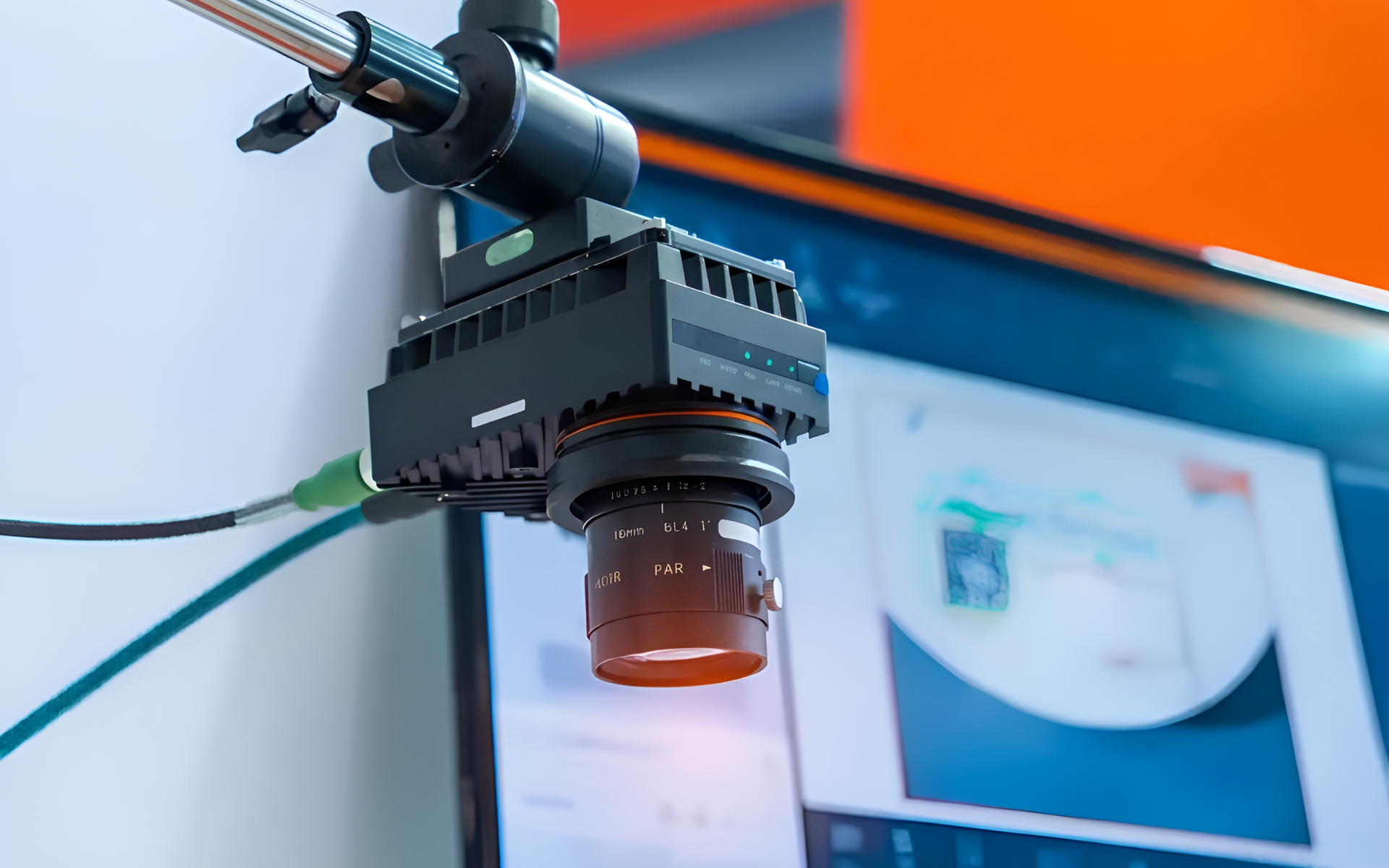
Learn how to select the right cameras and optical hardware for machine vision systems. Optimize sensor resolution, field of view, and environmental durability.
Learn how to design real-time operator dashboards, defect visualization architectures, and robust interfaces for deployable Physical AI hardware.
(Insights on edge computing, machine vision logic, and deploying intelligent models into physical environments)

Machine Vision
Learn how embedded machine learning and predictive analytics frameworks transform raw sensor data into actionable intelligence for physical hardware.
Discover how accelerated lifecycle testing and environmental validation ensure physical artificial intelligence hardware survives industrial deployment.
Learn how secure firmware, encrypted pipelines, and device authentication protect physical artificial intelligence from cybersecurity threats.
Learn how PCB density, thermal management, and flexible architectures impact physical artificial intelligence in compact hardware for female product leaders.
Discover how to manage multi-sensor synchronization, cross-sensor error compensation, and continuous recalibration for physical artificial intelligence hardware.
Discover how low noise analog front-ends and ADC optimization ensure trustworthy sensor data for physical artificial intelligence hardware.
Discover how robust embedded systems and firmware architecture ensure sensor value through optimal microcontroller selection and real-time processing pipelines.
Learn how to navigate environmental sensor selection criteria, accuracy versus cost trade studies, and lifecycle planning for physical artificial intelligence.
Discover how dynamic power path management, DC/DC optimization, and advanced battery chemistry enable reliable physical artificial intelligence hardware.
Discover how to navigate wireless architecture, cellular trade studies, and secure cloud integration for deployable physical artificial intelligence hardware.
(Insights on edge computing, machine vision logic, and deploying intelligent models into physical environments)

Deep Tech Sensing
Advanced Concepts
(Insights on complex systems engineering, cross-functional product development, and advanced hardware architectures)
Avoid prototyping delays caused by rigid BOMs. Learn how multi-footprint design, SoMs, and proactive supply chain strategies build custom PCBA resiliency.
Brute-forcing robotic speed causes severe mechanical resonance. Optimize pick-and-place automation using S-curve trajectories and specific robotic kinematics.
Isolated sensors create dangerous blind spots. Discover how fusing LiDAR, vision, and IMU data via edge compute ensures safe, deterministic AMR navigation.
Open-loop actuators fail under unpredictable physical resistance. Discover how PID controllers and high-resolution encoders enable precise closed-loop automation.
Navigate the trade-offs of commercial automation. Compare the reliability of off-the-shelf robotic arms against the spatial precision of custom hardware.
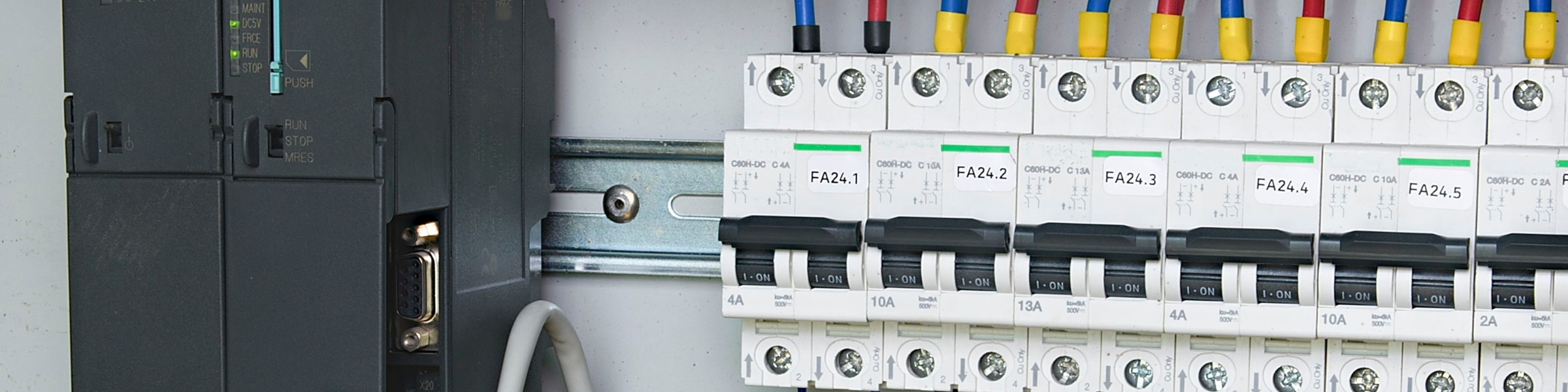
Bridge the gap between aging PLCs and modern machine learning. Explore how to safely retrofit legacy mechanical assets with edge compute and sensor fusion.
Asynchronous software causes mechatronic failures. Learn how RTOS and deterministic industrial buses synchronize logic algorithms with physical kinematics.
Human visual fatigue causes costly inspection errors. Learn how localized, AI-assisted vision augments manual quality control to stabilize production yields.
The best algorithms cannot fix poor physical optics. Explore pragmatic hardware strategies, from telecentric lenses to strobed LED lighting, for reliable AOI.
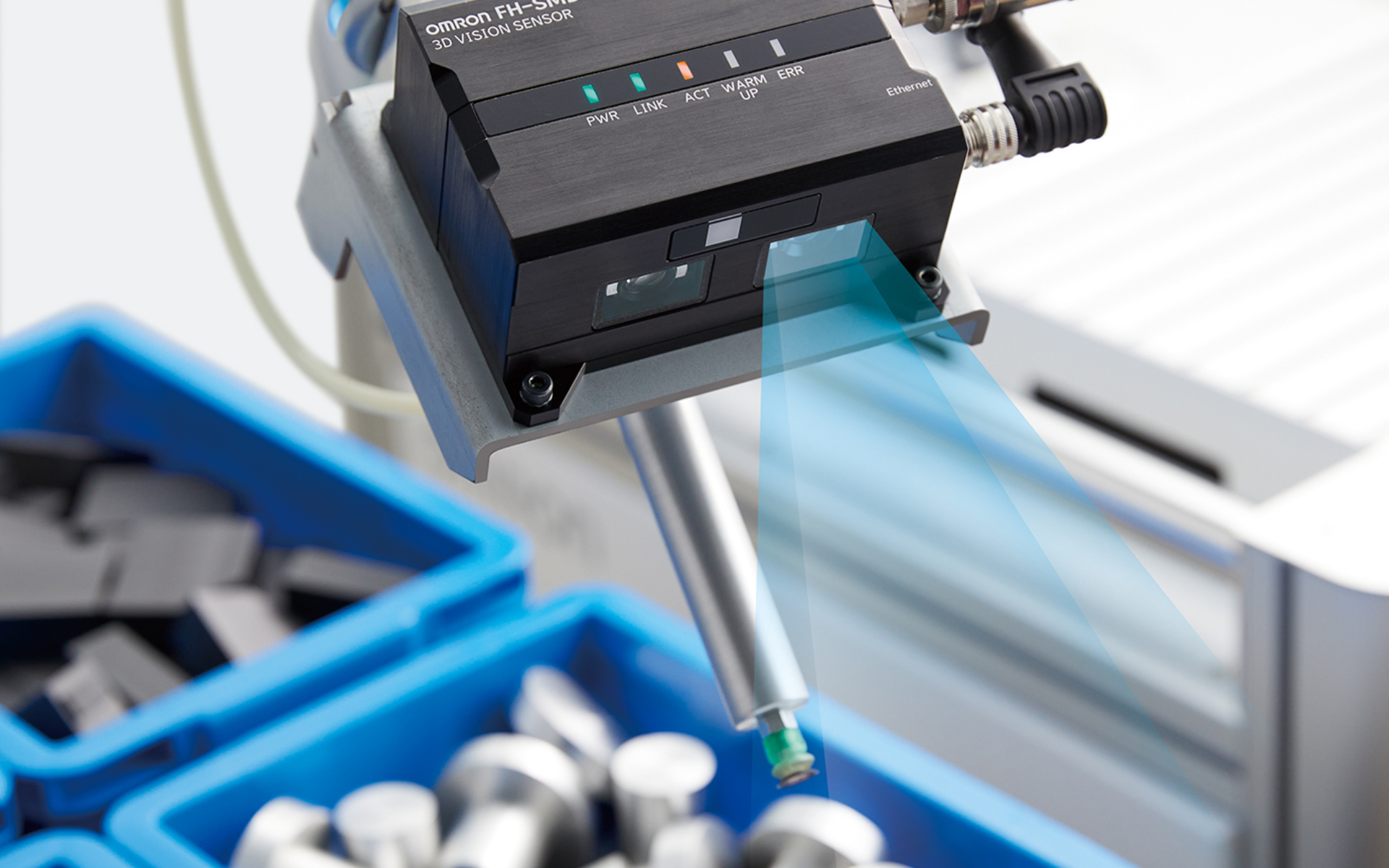
Give aging PLCs spatial awareness. Learn architectural strategies for retrofitting legacy industrial machinery with modern 3D point cloud vision systems.
Overcome cloud latency in high-speed manufacturing. Learn how localized edge computing enables deterministic, real-time machine vision for quality control.
High false-positive rates stall assembly lines. Discover how photometric stereo and edge-deployed deep learning stabilize Automated Optical Inspection (AOI).
Expose sub-surface defects invisible to standard cameras. Evaluate multi-spectral machine vision strategies for highly reliable, automated hardware assembly.
Protect proprietary manufacturing data. Learn pragmatic hardware and software strategies to secure localized Edge AI against physical and network breaches.
Microsecond delays cause catastrophic mechatronic failure. Explore hardware architectures and edge compute solutions to eliminate critical system latency.
Evaluate the latency, bandwidth, and reliability trade-offs between localized Edge AI and cloud processing for deterministic industrial hardware automation.
Cloud-reliant IoT devices suffer from severe latency and downtime. Learn pragmatic engineering strategies to transition hardware into reliable, edge-native systems.
Explore how deploying localized LLMs and physical AI at the edge enhances industrial hardware capability without relying on vulnerable cloud connections.
Running complex neural networks locally requires rigorous PCBA architecture. Explore memory, VPU selection, and thermal management for Edge AI deployments.
Ready to Accelerate Your Hardware Development?
Stop guessing your next engineering milestone. Whether you need to structure your IP, build a physical prototype, or secure funding, our team provides the strategic and technical frameworks to bring your hardware product to market
Schedule a Technical Consultation Today
IoT Connectivity & Wireless Integration Guide
Discover how to navigate wireless architecture, cellular trade studies, and secure cloud integration for deployable physical artificial intelligence hardware.
Lean Product Development in Hardware Engineering
Discover how Lean Product Development reduces engineering waste, accelerates learning, and delays irreversible tooling decisions in physical hardware manufacturing.
Design for X (DFX) in Hardware: Balancing Manufacturing Constraints
Discover how Design for X (DFX) methodologies optimize hardware for manufacturability, assembly, reliability, and cost to de-risk physical product scaling.
Why Hardware Startups Need Patents
Discover why hardware entrepreneurs pursue patents to protect core innovations, defend against direct copying, and boost long-term business value.