
Sensor Fusion Techniques for Autonomous Mobile Robots (AMRs)
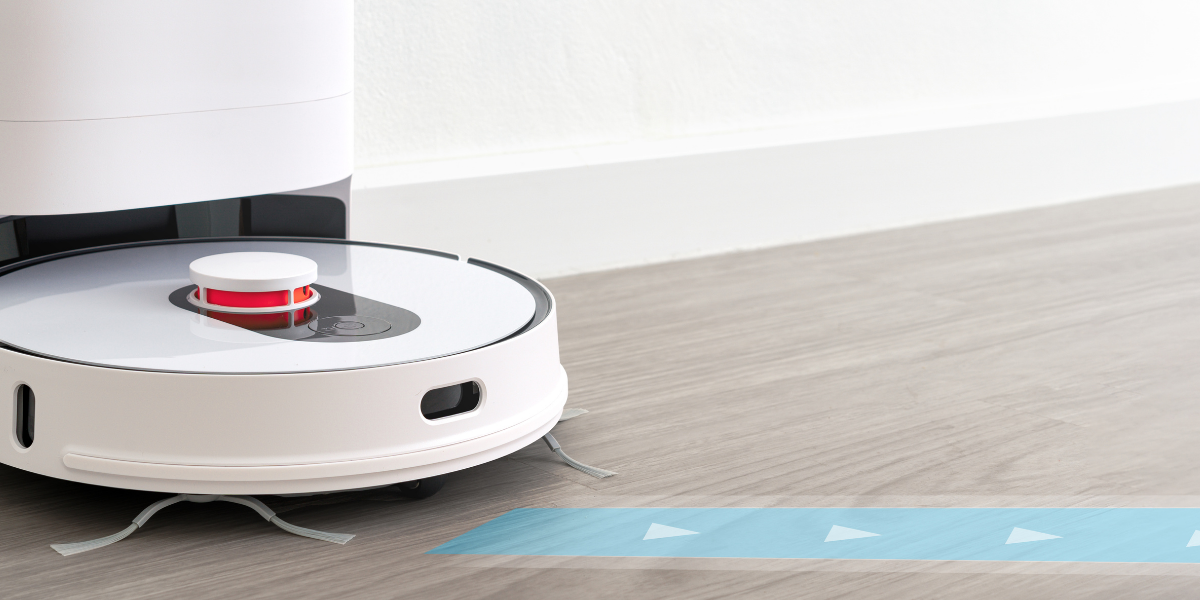
Autonomous Mobile Robots (AMRs) represent a massive leap forward from traditional Automated Guided Vehicles (AGVs). While legacy AGVs rely on fixed physical infrastructure like magnetic floor tape to navigate, AMRs must autonomously perceive, map, and traverse dynamic, unpredictable commercial environments. However, the physical world is hostile to electronic perception. Dust, shifting lighting, reflective surfaces, and dynamic obstacles easily confuse individual sensors. When an AMR weighing 500 kilograms relies on a single point of failure for its spatial awareness, a missed calculation can result in severe mechanical collisions and facility downtime.
To achieve reliable autonomy, engineering teams cannot rely on isolated data streams; they must implement sensor fusion. By combining inputs from multiple, diverse sensor modalities—such as LiDAR, machine vision, and inertial measurement units (IMUs)—the robotic system can cross-validate its environment, compensating for the physical weaknesses of any single sensor. This article explores the vulnerabilities of isolated perception and the architectural methodologies required to fuse multi-modal data in real-time.
The Vulnerabilities of Isolated Perception
The Blind Spots of Optical Sensors
Optical sensors provide phenomenal high-resolution data but are easily defeated by environmental physics. Machine vision cameras require stable ambient lighting; sudden glare from a warehouse skylight can completely blind a vision-based navigation system. Conversely, 2D and 3D LiDAR emit laser pulses to measure distance, providing excellent depth perception regardless of ambient light. However, LiDAR relies on photons bouncing back to the sensor. If an AMR approaches a perfectly clear glass partition or a highly polished metal door, the laser pulses pass through or scatter unpredictably, causing the robot to register an empty path where a solid obstacle exists.
The Drift of Inertial and Odometry Data
To counter optical blind spots, robots utilize internal mechanical sensors. Wheel odometry measures the rotation of the robot's wheels to calculate distance traveled, while an Inertial Measurement Unit (IMU) tracks acceleration and rotational velocity. These sensors are immune to lighting and glass. Unfortunately, they suffer from physical accumulation errors known as drift. If a wheel slips slightly on a damp concrete floor, the odometry falsely registers movement. Over a distance of fifty meters, these microscopic miscalculations compound, causing the software’s internal map to diverge entirely from the robot's actual physical location.
Engineering the Fusion Architecture
Probabilistic Mathematics: The Kalman Filter
Sensor fusion is not simply averaging data points together; it is an exercise in probabilistic confidence. The industry standard for localizing an AMR is the Extended Kalman Filter (EKF). This mathematical algorithm continuously evaluates incoming data streams based on their statistical variance. If the AMR is driving through a dark corridor with glass walls, the EKF recognizes that the LiDAR data is noisy and the camera data is unreliable. It autonomously lowers its confidence in the optical sensors and relies heavily on the IMU and wheel odometry to safely navigate the blind spot until reliable optical data returns.
Edge Compute and Deterministic Latency
Fusing multiple high-density data streams requires immense computational throughput. An AMR must simultaneously ingest gigabytes of 3D point clouds, process deep learning visual inferences, and calculate complex Kalman matrices—all within milliseconds. Sending this data to a remote server introduces fatal latency. True sensor fusion requires integrating ruggedized Edge computing nodes directly onto the robot's internal PCBA. By utilizing dedicated embedded GPUs or heterogeneous System-on-Chips (SoCs), the hardware can execute these heavy probabilistic calculations locally, ensuring deterministic, real-time actuation for safe navigation.
-
Sensor fusion is the computational process of combining data from multiple different types of sensors—such as LiDAR, optical cameras, and Inertial Measurement Units (IMUs)—into a single, cohesive model of the physical environment. By continuously cross-validating these diverse data streams, the robot can compensate for the individual weaknesses of each sensor, resulting in highly reliable navigation and obstacle avoidance in unpredictable environments.
-
While LiDAR is excellent for measuring physical distances, it relies on light pulses bouncing off solid objects. In commercial environments, highly reflective surfaces like polished metal or transparent obstacles like glass doors cause the laser pulses to scatter or pass through entirely. Without secondary sensors like ultrasonic detectors or machine vision cameras, the AMR would fail to perceive the glass, resulting in a severe mechanical collision.
-
Sensor drift occurs when internal mechanical tracking systems, like wheel encoders or IMUs, accumulate tiny microscopic measurement errors over a period of time. For example, if an AMR's wheel slips on a slick concrete floor, the encoder records movement that did not actually happen physically. Without external optical sensors to continuously correct these errors via sensor fusion, the robot's software map will eventually diverge completely from its true physical location.
Engineering reliable autonomous mobility requires moving beyond simple obstacle detection into complex probabilistic mathematics and rigorous hardware integration. At Unlimit Ventures, we help multidisciplinary teams evaluate their perception stacks, selecting the right sensor payloads, and designing the edge compute architectures required to execute real-time sensor fusion. If your robotic product is struggling with environmental edge cases, navigation latency, or complex spatial awareness, we can work together to map out a highly reliable technical path forward.