
Evaluating Edge AI vs. Cloud Processing for Low-Latency Hardware Automation
Modern industrial environments demand microsecond precision, yet many hardware architectures still rely on remote servers for decision-making. Transmitting sensor data to the cloud introduces variable network latency, packet loss, and jitter. In autonomous robotics or high-throughput manufacturing, a 50-millisecond delay can result in misaligned components, damaged equipment, or severe safety hazards. This disconnect between cloud-native software and the physical constraints of automation forces a critical reevaluation of where compute power must reside.

Shifting computational loads closer to the sensor—known as Edge AI—presents a highly effective path to achieving deterministic execution. However, abandoning the limitless compute of the cloud introduces strict new constraints regarding thermal dissipation, power consumption, and printed circuit board assembly (PCBA) design. This article explores the technical trade-offs of localized inference and pragmatic methodologies for balancing edge and cloud architectures in commercial automation.
The Core Mechanics: Cloud Latency vs. Edge Determinism
Understanding the Cloud Bottleneck
Traditional architectures prioritize cloud processing for its scalable resources and asynchronous updates. While highly efficient for predictive maintenance and long-term analytics, this becomes a severe bottleneck in closed-loop control systems. The round-trip time required to process a localized event remotely is inherently unpredictable. Network dependencies make cloud-exclusive systems brittle; a momentary drop in connectivity can immediately halt an entire mechanical process.
Deterministic Execution at the Edge
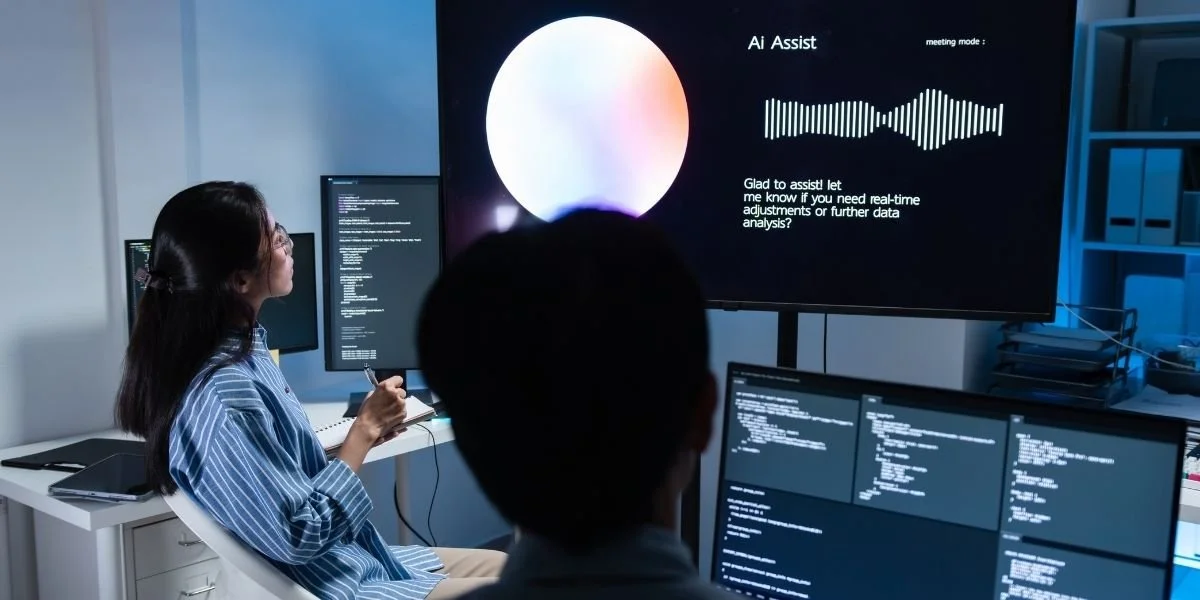
Edge computing solves this by embedding specialized microprocessors, such as Neural Processing Units (NPUs), directly onto the local PCBA. This architecture guarantees deterministic execution. When a machine vision camera detects a manufacturing defect, the local processor computes the inference and commands the pneumatic ejector in milliseconds, independent of internet connectivity. This localized approach ensures operational continuity and drastically reduces the bandwidth costs associated with streaming raw video feeds.
Engineering the Transition to Local Inference
Balancing Compute Constraints with Thermal Realities
Deploying machine learning models locally is a complex hardware challenge. Advanced inference engines require substantial power, generating localized heat. In industrial settings requiring IP-rated, sealed enclosures, active cooling mechanisms are typically unviable. Engineers must implement precise thermal management—such as custom heat sinks, thermal vias, and careful component placement—to prevent thermal throttling while maintaining the compact form factors required by modern mechatronics.
Hybrid Architectures: The Pragmatic Middle Ground
For most automation applications, a hybrid approach yields the most reliable results. Instead of forcing all computations to the edge, engineering teams can separate workloads by urgency. Edge nodes strictly handle real-time actuation, safety protocols, and raw data filtering. Concurrently, the cloud manages heavier asynchronous tasks, like retraining machine learning models based on aggregated historical data and pushing optimized, quantized updates back down to the edge hardware.
-
Edge AI processes sensor data locally on the device's hardware, ensuring immediate, deterministic responses required for physical safety. Cloud AI transmits data to remote servers, offering massive compute capability but introducing unpredictable network latency. For industrial automation, the edge handles real-time reflexes while the cloud manages heavy, asynchronous analytics.
-
Running complex neural networks locally generates significant heat, which can cause thermal throttling and degrade processing performance over time. Industrial environments often require fanless, sealed enclosures to protect against environmental hazards, complicating traditional heat dissipation methods. Engineers must carefully design custom thermal pathways and utilize advanced heat sinks to maintain optimal operating temperatures under continuous compute loads.
-
Yes, legacy machines can often be augmented using modular edge compute gateways and external machine vision sensor arrays. This approach allows facilities to integrate localized predictive monitoring without the capital expense of replacing heavy mechanical assets. However, achieving closed-loop actuation requires custom engineering to bridge the communication gap between these new edge nodes and older programmable logic controllers (PLCs).
The integration of localized intelligence into physical products is a rapidly evolving field, requiring a careful balance of software capability and mechanical reality. At Unlimit Ventures, we help teams explore these complex intersections, moving past standard architectures to engineer highly robust, performance-driven physical systems. If your team is navigating latency challenges, custom PCBA design, or transitioning from prototype to production, we can work together to map out a reliable technical path forward.